
Start your flight training sooner with Handypay

Flexible, affordable payments plans now available.

Night VFR Rating

Night VFR Rating in NSW

An aircraft flying during sunset.

Flying at night is a completely different experience. With fewer visual references, depth perception changes and your reliance on instruments and planning becomes far more important.

The Night VFR Rating builds the skills needed to operate confidently after dark, while also improving your precision, awareness, and overall flying discipline as a pilot.

For many pilots, it is a practical next step after the Private Pilot Licence. It gives you more flexibility in how and when you fly, removes the pressure of daylight-only planning, and helps prepare you for more advanced training.

The Central Coast Aero Club offers both single-engine and multi-engine Night VFR Ratings.

What you'll Learn

Night VFR training builds directly on your Private Pilot Licence (PPL) skills and introduces you to the challenges of operating in low-light conditions.

You will learn:

Training places a strong emphasis on situational awareness and maintaining control with reduced visual cues – a key difference from daytime flying.

The Experience

The NVFR rating is more than just “flying at night” – it’s a progression toward professional-level flying.

It is commonly used as a stepping stone toward:

It also builds the foundations for instrument flying by improving accuracy, workload management, and decision-making.

Night VFR Training Structure

The Night VFR Rating follows a structured CASA syllabus combining both simulator and practical flight training.

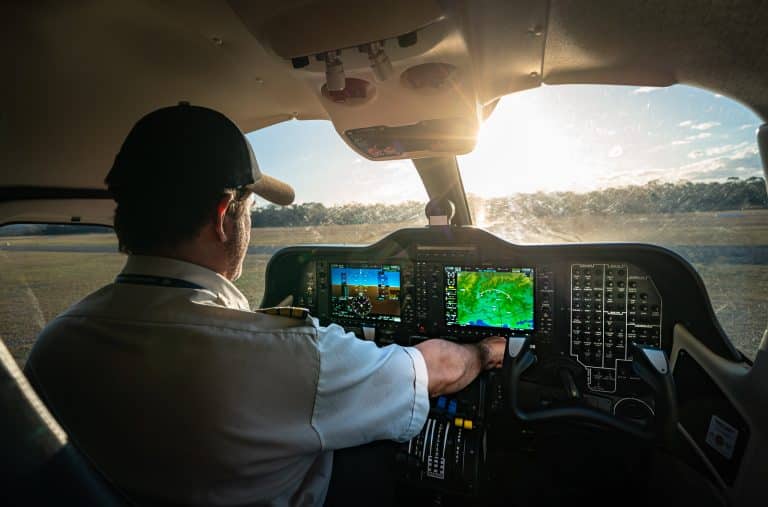
Night training involves circuits, navigation and instrument flying.  Training will explore the difference between flying at night compared to flying during the day.

Most students complete their Night VFR Rating in 12-14 hours of flying.  Training is conducted one-on-one with an instructor, allowing you to build skills and confidence at your own pace.

Pricing Details

Component Approximate Cost
Single Engine Night VFR Rating $7,500
Pricing is based on average hours of completion, hours may be lower or higher depending on competency level and may vary depening on the aircraft used. This price is based on training in a Cessna 172 and is inclusive of landing fees.
Multi-Engine Night VFR Rating Call For Pricing
Pricing is based on average hours of completion, hours may be lower or higher depending on competency level and may vary depening on the aircraft used. This price is based on training in a Tecnam P06T and is inclusive of landing fees. If you are training in a Multi-Engine aircraft you will need to hold a Multi-Engine Class Rating.

Check out these other Exciting Training Options

Take the Next Step Beyond Daylight

The Night VFR Rating is a valuable next step for pilots who want more flexibility, stronger night flying skills, and a pathway toward advanced training. Train at Warnervale with experienced instructors and build the confidence to operate safely after dark.

Night VFR Rating FAQs

The Night VFR Rating allows pilots to operate an aircraft at night under visual flight rules. It removes the daylight restriction on your licence and enables you to take off, navigate, and land safely after last light or before first light.

CASA requires a minimum of around 10 hours of night flying, including navigation, circuit training, and instrument reference flying. The total time may vary slightly depending on individual progress.

Yes. To begin Night VFR training, you must hold a Private Pilot Licence (PPL) or higher, along with a valid CASA medical.

The Night VFR Rating allows flight at night in visual conditions, while an Instrument Rating allows you to fly in cloud or low visibility using instruments alone. NVFR is often completed first as a stepping stone toward instrument flying.

Most pilots complete the rating over a short, focused period, depending on availability and weather conditions. Training is typically conducted over several evenings.

Yes, a night VFR can be obtained in a single-engine or multi-engine aircraft.  A single-engine NVFR is only valid for single-engine aircraft.  However, a multi-engine NVFR is valid for both single-engine and multi-engine aircraft.

Report a Broken Link

Let us know what you were trying to find and we’ll point you in the right direction.