Introduction
The Sydney Basin is home to some of Australia’s busiest and most complex airspace, with major international, military and general aviation operations all sharing the same region. With the opening of Western Sydney International Airport, significant changes have been made to the structure and operation of airspace throughout the basin to accommodate the new airport and ensure the safe and efficient movement of aircraft.
For pilots operating from Warnervale Airport and across the Central Coast, these changes affect much more than flights to Bankstown Airport. New airspace classifications, mandatory transponder requirements, flight planning obligations and published VFR routes will influence how pilots navigate through and around the Sydney Basin.
To help our members and the wider aviation community understand the new procedures, Central Coast Aero Club has prepared the following overview and video briefing. While this article highlights the key changes and their practical implications, pilots should always refer to current charts, AIP Supplements, ERSA, NOTAMs and Airservices Australia publications when planning a flight.
Watch the Full Presentation below
Video courtesy of Central Coast Aero Club. Information current at the time of recording. Pilots should always refer to current aeronautical publications and NOTAMs.
Prefer reading?
Continue below for a summary of the key Sydney Basin airspace changes and what they mean for Central Coast pilots.
Why Are These Changes Important?
The Sydney Basin has long been one of Australia’s busiest and most complex areas of airspace. With major commercial airports, military operations, flight training organisations, helicopter traffic and recreational aviation all operating within a relatively confined area, the airspace system must safely accommodate a diverse range of aircraft and operational requirements.
The introduction of Western Sydney International Airport represents the most significant change to Sydney aviation infrastructure in decades. Located at Badgerys Creek, the new airport will add another major controlled aerodrome to an already busy region, requiring a comprehensive redesign of surrounding airspace to ensure aircraft can arrive, depart and transit safely and efficiently.
As a result, Airservices Australia and CASA have implemented extensive changes throughout the Sydney Basin. These changes include new controlled airspace boundaries, revised VFR routes, mandatory transponder requirements in certain areas, and new procedures for pilots operating to and from airports such as Bankstown and Camden.
For pilots based at Warnervale Airport, these changes are particularly relevant. Many cross-country flights from the Central Coast involve transiting the Sydney Basin or operating to destinations such as Bankstown, Camden and Canberra. Understanding the new procedures will help pilots plan flights more effectively, communicate confidently with air traffic control and operate safely within the revised airspace environment.
While the new system introduces additional planning and procedural requirements, it has been designed to create a more structured operating environment capable of supporting the future growth of aviation in the Sydney region.
The Biggest Changes for Pilots
While the redesign of Sydney Basin airspace includes numerous procedural and charting changes, there are several key changes that every pilot operating in the region should understand.
Flight Plans Are Now Required
Under the new arrangements, pilots operating to or from Bankstown Airport must lodge a flight plan before entering the Bankstown Class D CTA. This represents a significant change from previous operations, where many VFR flights could operate without the need for a flight plan.
Transponders Have Become Essential
Pilots operating within the redesigned Sydney Basin airspace will be required to use a transponder and obtain a discrete transponder code before entering the controlled airspace. This requirement applies to operations that previously may have been conducted outside controlled airspace using traditional VFR procedures.
More Communication with Air Traffic Control
The new procedures introduce additional communication requirements. Rather than simply contacting Bankstown Tower near the control zone boundary, pilots may now be required to communicate with Sydney Centre, Bankstown Approach and Bankstown Tower during a single arrival or departure. This creates a more structured environment and allows controllers to manage traffic more effectively throughout the basin.
Published VFR Routes Become the Norm
A series of new inbound and outbound VFR routes have been established to provide predictable traffic flows around the Sydney Basin. These routes include defined waypoints, altitude restrictions and tracking requirements designed to keep aircraft safely separated from other traffic and adjacent controlled airspace.
Less Flexibility for Ad-Hoc Routing
One of the most noticeable changes for many pilots will be the reduction in opportunities to simply navigate around the basin outside controlled airspace. With much of the former Class G airspace now replaced by controlled airspace, pilots will generally be expected to operate via published routes and approved clearances when transiting the region.
Staying Current Is More Important Than Ever
As the new procedures continue to evolve, pilots should ensure they are operating with current charts, up-to-date GPS and EFB databases, and the latest AIP Supplements and NOTAMs. Familiarity with the published routes and procedures before flight will help reduce workload and improve situational awareness when operating in the Sydney Basin.
Changes to Bankstown Operations
The most significant operational changes within the Sydney Basin affect Bankstown Airport. For many years, VFR pilots could navigate to and from Bankstown using established VFR lanes, remaining outside controlled airspace until approaching designated reporting points such as Prospect Reservoir or 2RN. Once approaching the control zone, pilots would contact Bankstown Tower, receive joining instructions and continue their arrival.
Under the new airspace arrangements, operations at Bankstown have become considerably more structured. Pilots arriving at or departing from Bankstown are now required to operate within a system of published VFR routes, flight plans, discrete transponder codes and air traffic control clearances.
Arriving at Bankstown
Pilots intending to arrive at Bankstown Airport must now lodge a flight plan before flight and obtain a discrete transponder code before entering the Bankstown Class D CTA. Depending on the route being flown, pilots may be required to communicate with Sydney Centre, Bankstown Approach and Bankstown Tower during a single arrival.
Several published inbound routes have been established to provide predictable traffic flows into the airport, including:
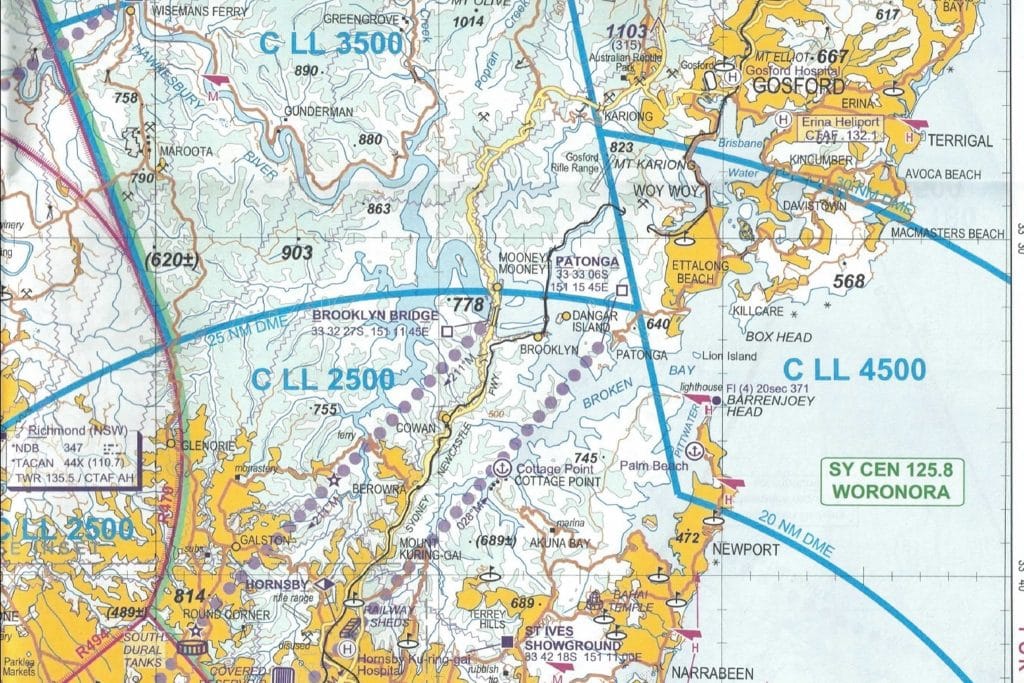
- Brooklyn Inbound (from the north)
- Lighthorse Inbound (from the west)
- St Helens Inbound (from the south-west)
Each route includes designated waypoints, altitude restrictions and communication requirements that pilots must follow unless otherwise instructed by air traffic control.
Departing Bankstown
Departures have also changed significantly. Prior to engine start, pilots must obtain an airways clearance and transponder code from Bankstown Ground. Following departure, aircraft are required to follow published outbound routes and comply with any altitude or tracking restrictions associated with their clearance.
Published outbound routes include:
- Hornsby Outbound
- Penrith Outbound
- Mount Annan Outbound
- Woronora Outbound
Rather than simply departing the control zone and continuing on course, pilots can expect to follow assigned routes until leaving the Bankstown CTA and being released by air traffic control.
A More Structured Operating Environment
While the new procedures introduce additional planning and radio workload, they are designed to support the safe integration of Western Sydney International Airport into the Sydney Basin airspace system. By using published routes and predictable traffic flows, air traffic controllers can manage increasing aircraft movements while maintaining safe separation between commercial, training and recreational aviation traffic.
For pilots who regularly operate to or through Bankstown, becoming familiar with these new procedures before flight will help reduce workload and improve confidence when operating within the revised airspace environment.
What Does This Mean for Central Coast Pilots?
For pilots operating from Warnervale Airport, the Sydney Basin airspace changes are more than just a Bankstown issue. Many common training, recreational and cross-country flights from the Central Coast involve operating through or adjacent to the redesigned airspace.
Flights to Bankstown for training, maintenance, events or personal travel will now require additional planning, including flight plan submission, transponder use and familiarity with the new published routes. Pilots who have previously operated into Bankstown under the old procedures should take the time to understand the revised arrival and departure requirements before their next flight.
The changes may also affect pilots conducting cross-country flights to destinations south and west of Sydney. Popular routes towards Canberra, Camden, Goulburn and regional New South Wales may now require transit via published VFR routes and greater interaction with air traffic control than many pilots have previously experienced.
For student pilots, the changes provide an excellent opportunity to develop confidence operating within controlled airspace and working with multiple air traffic control units. Understanding the new procedures will become an increasingly important skill for pilots flying throughout the Sydney Basin.
Central Coast Aero Club encourages members and aircraft hirers to familiarise themselves with the updated charts, procedures and published guidance material before operating within the affected airspace. If you are uncertain about any aspect of the new arrangements, consider discussing the changes with one of our instructors or booking a dual familiarisation flight to gain practical experience in the new operating environment.
As with any significant airspace change, preparation is the key to reducing workload and ensuring safe, efficient operations. Taking the time to understand the new procedures before flight will help make your transition to the revised Sydney Basin airspace as smooth as possible.
Further Resources
The Sydney Basin airspace changes are supported by a range of official publications, briefing materials and reference documents. Pilots are encouraged to review these resources and ensure they are familiar with the latest procedures, charts and operational requirements before flying within the affected airspace.