Andrew Bennett's Aviation Journey
In just over two years, Central Coast Aero Club member Andrew Bennett progressed from his first flying lesson to becoming a flight instructor, all while transitioning from a successful career in construction. Today, he not only teaches the next generation of pilots at Warnervale but also volunteers his time and aircraft to help Australians access critical medical treatment through Angel Flight.
It is a remarkable journey, but one that began with a simple dream.
A Dream Deferred, But Never Forgotten
Like many aviation enthusiasts, Andrew had always wanted to learn to fly.
Growing up, however, life took him in a different direction. He entered the building industry, worked hard, built a reputation for quality work and eventually established a successful construction business. Aviation remained in the background, something he hoped to pursue one day when the time and circumstances were right.
That opportunity finally arrived in February 2023 when he commenced his Recreational Pilot Licence (RPL) training at Central Coast Aero Club.
What followed was an extraordinary period of learning and achievement.
Flying three times a week while continuing to run his business, Andrew quickly progressed through his training. After completing his RPL, he moved on to his Private Pilot Licence (PPL), Commercial Pilot Licence (CPL) and ultimately his Flight Instructor Rating (FIR), achieving in just over two years what many pilots take much longer to accomplish.
Throughout his RPL and PPL training he continued managing the business he had spent years building. As his aviation ambitions grew, however, so did the demands of training.
Eventually, he made the decision to sell the business and focus entirely on aviation.
Looking back, it is a decision he has never regretted.
One Rating at a Time
Unlike many aspiring professional pilots, Andrew never set out with a carefully mapped aviation career plan. In fact, there wasn’t really a plan at all. Initially, he simply wanted to learn how to fly.
Once he achieved that, he wanted to learn how to navigate. Then came the Private Pilot Licence. After that, the Commercial Pilot Licence seemed like the logical next step. Becoming a flight instructor followed naturally.
People often asked whether he wanted to join the airlines or pursue a charter flying career, but Andrew’s motivation was different.
Each qualification was simply the next challenge in a journey of continuous learning.
Rather than chasing a particular job title, he was pursuing a deeper understanding of aviation itself.
Aircraft that Shaped the Journey
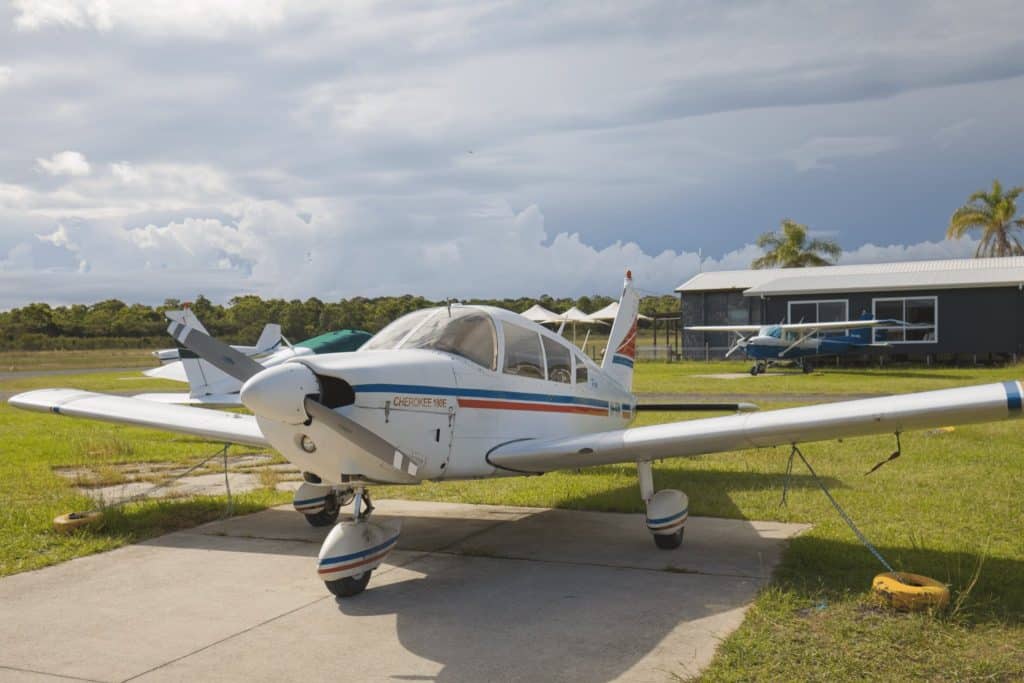
Shortly after gaining his RPL, Andrew purchased his first aircraft, a Piper Cherokee 140 registered VH-RVA.
The aircraft played a significant role in his training journey, providing an opportunity to build experience and flight hours while working towards his Private and Commercial Pilot Licences.
One of his earliest memorable flights came during navigation training when he and his instructor flew the aircraft back to Warnervale from Narromine. For Andrew, it represented far more than a simple ferry flight. It demonstrated one of the things he loves most about aviation — the freedom to simply get into an aircraft and go somewhere.
“The ability to just get into a plane and fly anywhere” remains one of the greatest attractions of flying.
As his training progressed into more advanced qualifications, Andrew expanded his horizons again.
To complete his Instrument Rating and Multi-Engine training, he later purchased a Piper Comanche twin engine aircraft, VH-SLP. The aircraft remains part of his aviation journey today and reflects the commitment he made to pursuing aviation at a higher level.
The Challenge of Becoming an Instructor
While becoming a flight instructor was never part of the original plan, it has become one of the most rewarding chapters of Andrew’s aviation story. Interestingly, many of the skills that make him an effective instructor were developed long before he entered a cockpit.
Throughout his years in construction, he enjoyed teaching apprentices and passing on practical skills to those entering the trade. Helping people learn and develop confidence was something he had always found rewarding. Flight instruction provided an opportunity to continue doing exactly that.
Today, he enjoys helping students understand not just how to operate an aircraft, but why it behaves the way it does.
For Andrew, one of the most satisfying aspects of instruction is explaining the relationship between the controls, aerodynamics and aircraft performance in a way that students can genuinely understand.
The Flight Instructor Rating course itself proved to be the most challenging part of his aviation journey.
Coming from a practical trade background, the instructional component pushed him well outside his comfort zone.
“As a builder, I’d never done a PowerPoint presentation. It just wasn’t in my toolbox.“
For someone who describes himself as mechanically minded, developing lesson plans, presenting material and standing in front of students required a completely different skill set.
Yet overcoming those challenges ultimately helped shape the instructor he is today.
Creating Future Pilots
One of the greatest rewards of instruction comes from watching people discover aviation for the very first time. Andrew has conducted numerous Trial Instructional Flights and says they remain some of his favourite flying experiences. For many participants, it is their first time in a light aircraft and they often arrive with little idea of what to expect.
That uncertainty quickly changes once the wheels leave the runway.
Seeing the excitement on someone’s face as they experience flight firsthand is something he never tires of. During many trial flights, Andrew introduces passengers to manoeuvres that allow them to feel how an aircraft responds in the air. He often starts with gentle turns before gradually increasing the bank angle, allowing passengers to safely experience additional G-forces while remaining comfortable and in control.
For many people, it becomes a memory that lasts a lifetime.
As Andrew points out, very few people ever forget their first flight and for instructors, sharing that experience is one of the most rewarding aspects of the job.
Of course, the rewards don’t stop there.
Watching a student complete their first solo flight, master a difficult landing or achieve a training milestone provides a level of satisfaction that is difficult to describe.
Seeing students succeed remains one of the highlights of his aviation career.
Giving Back Through Aviation
Andrew’s passion for aviation extends well beyond flight training. For him, flying also provides an opportunity to help others.
“I have the means to get someone into an aircraft, so why not do it?“
That simple philosophy eventually led him to become involved with Angel Flight Australia.
Flying Hope Through Angel Flight
Angel Flight is a charity that connects volunteer pilots with people living in regional and remote communities who need to travel for specialist medical treatment.
Pilots donate both their time and the use of their aircraft, helping reduce the burden of accessing healthcare for people who may otherwise face long and difficult journeys.
To become an Angel Flight pilot, volunteers must meet specific experience requirements and undergo a thorough approval process that includes verification of qualifications, flying history and background checks. Once approved, pilots can volunteer for missions that suit their qualifications, aircraft type and availability.
Andrew’s first Angel Flight mission was an induction flight alongside another pilot. The mission involved flying from Maitland to Warren to collect a patient travelling to a specialist appointment. The experience left a lasting impression.
“It was incredibly rewarding to be able to bring someone in from a remote area for treatment they may not otherwise have easy access to.“
Since then, he has continued volunteering whenever possible.
More Than Just Flying
Angel Flight missions involve much more than simply transporting passengers from one location to another. Every patient has unique circumstances and requirements and aircraft selection, for example, can play an important role.
A high-wing aircraft such as a Cessna may be better suited to passengers with limited mobility, while larger aircraft with different seating configurations may be preferable when family members or carers need to travel together.
Each mission requires careful planning and coordination between pilots, patients and Angel Flight organisers.
Behind every flight is a person facing medical challenges and seeking treatment that may only be available hundreds of kilometres from home.
Helping make those journeys possible is what gives the work such meaning.
The Reward at the End of the Day
For Andrew, some of the most memorable moments come after the mission is complete.
He particularly enjoys those late-afternoon flights home after delivering a patient to a specialist appointment, reflecting on the knowledge that aviation has helped improve someone’s life.
There is a sense of purpose that extends beyond the aircraft itself.
The same feeling exists in flight instruction.
Whether it is a student completing their first solo flight, executing a perfect landing or overcoming a challenge they have been working on for weeks, the reward comes from seeing others succeed.
Aviation, he says, is incredibly rewarding . . . . Very rewarding.