Why I Decided to Start Learning to Fly Later in Life
There’s a moment many of us have had at some point in life – looking up as an aircraft passes overhead and thinking, I wonder what that’s like. For years, that thought tends to sit quietly in the background, filed somewhere between “one day” and “probably not.” For me, “one day” eventually turned into reality when my adult kids purchased a Trial Instructional Flight (TIF) for my birthday. I hoped this gift would lead into something more serious, but I wasn’t expecting what would become one of the most rewarding, mentally demanding, and occasionally humbling learning experiences I’ve taken on as a mature-age student.
The Trial Instructional Flight is often described as a taste of flying, but in reality, it’s more like being handed a firehose. Before we’d even left the ground, there was a flood of information delivered at a pace that made it clear this wasn’t going to be a passive experience. Once airborne, I was handed the controls and told to “have a feel for it,” while still trying to process everything else happening around me, it was exhilarating, but also completely overwhelming. What stood out most wasn’t how much I learned – it was how much I didn’t understand yet and that’s exactly how it should be.
Once back on the ground, I was quite excited about the idea of actually learning how to fly but I thought there were too many barriers, the foremost being my wife not wanting me to “waste our money” on something as self-absorbed as flying lessons, but as it turned out I had her complete support and encouragement because she saw something that I didn’t . . . I had become withdrawn and not as outgoing and happy as I used to be. She saw my eyes shining brightly after the trial instructional flight and knew that this was something I needed to do. One conversation led to another and before too long I was booked onto my first actual lesson for the Recreational Pilot Licence.
Early Lessons: Drinking from the Firehose
The first phase of flight training is less about mastery and more about exposure. As a mature student, this comes with its own set of challenges.
I’m not as quick to memorise as I might have been years ago, but you learn to look for patterns and meaning more deliberately. You want to understand why, not just what. That’s a strength – but it also slows things down initially. The biggest surprise was the mental fatigue. A one-hour lesson can leave you more drained than a full day at work. Not because of physical effort, but because of the constant decision-making, listening, processing, and adjusting. Very quickly, I realised that what happens after the lesson is just as important as what happens during it and I needed to find a way to recall everything I learnt in each lesson.
Capturing the Learning: What Actually Helped
Two simple habits made a significant difference to my progress.
Keeping a Flight Diary
After each lesson, I’d write down:
- What we did
- What went well
- What didn't
- Questions for next time
This became a personal debrief tool. It helped consolidate learning, track progress, and identify recurring mistakes. It also allowed me to write down all my annoying questions for the next unsuspecting instructor.
Recording Lessons (With Permission)
The volume of information, especially radio calls and instructor feedback is hard to retain in real time, especially at the beginning. Recording lessons can be incredibly useful for review. I purchased an adapter that splits the audio, allowing me to record directly on my iPhone. Using an application called MetaRecorder I found that I could make amazing recordings which I then downloaded and ran through another free program called Audacity to remove all the silence which shortened recordings to around 20 minutes.
But there are non-negotiables:
- Always ask your instructor for permission on the day
- Accept “no” without hesitation
- Use recordings strictly for personal learning
- Never, under any circumstances, share them on social media
Handled properly, recordings can accelerate understanding but handled poorly, they can damage trust.
The Aircraft Matters More Than You Think
One of the more practical and often overlooked considerations is the type of aircraft you train in.
As a mature student, comfort isn’t a luxury, it directly affects how well you learn. The standard aircraft for training is the Cessna 150, however if you’re over 90kg like me (but only just!) you will need to jump into one of the other aircraft, likely a Cessna 172 or a Piper Cherokee.
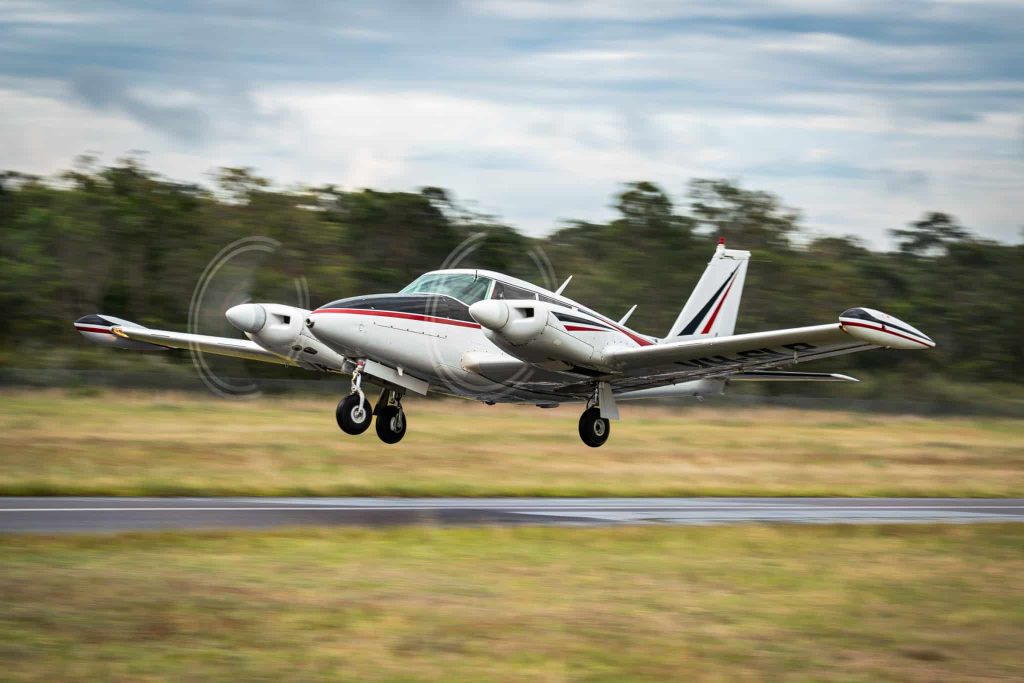
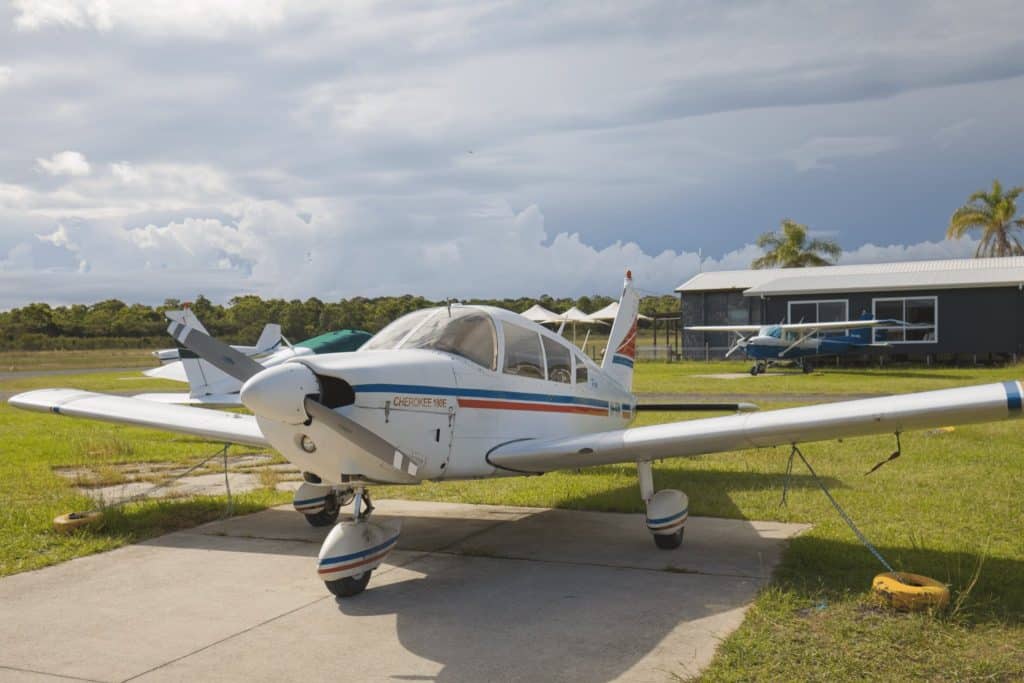
My aircraft of choice is a Piper Cherokee, a low wing design that appeals to my more traditional idea of what an aircraft should look like. It’s just a personal choice but there are some practical considerations shown below:
Low-Wing Aircraft (e.g. Piper Cherokee)
- Easier to get into - more of a step-in than a climb
- Generally kinder on knees and hips
- Feels more like sitting down into the cockpit
- You’ll need to get down low to run through some of the pre-flight checks
High-Wing Aircraft (e.g. Cessna 152/172)
- Requires climbing up into the cockpit
- Can be awkward with limited mobility
- Offers better downward visibility due to the wing position
- Refuelling requires climbing a step ladder
If you have any joint or mobility issues, it’s worth trying both. The difference is noticeable, and over dozens of lessons, it adds up.
Learning Differently (and Deliberately)
Flying isn’t something you can brute-force through repetition alone, especially later in life. You need to be intentional about how you learn.
Some approaches that helped me:
- Chair flying: mentally rehearsing procedures step-by-step
- Talking things out loud: reinforcing sequence and flow
- Spacing learning: shorter, more frequent lessons beat long gaps
- Using simulators carefully: useful for familiarisation, but they can reinforce bad habits if used uncritically
Progress isn’t linear. Some lessons feel like breakthroughs; others feel like regression. Both are part of the process. One point I would make though is to be consistent with the lessons, the more often you have lessons, the more efficient your progression will be and can actually save you money in the long term. At a minimum you should aim for once a week however there will be times where a double lesson or multiple lessons a week are hugely beneficial, especially when learning circuits and practicing landings.
The Instructor Relationship
A good instructor does more than teach, they translate aviation into something you can absorb.
Communication style matters and not every instructor suits every student, and that’s okay. As a mature learner, you bring a level of self-awareness that helps here, you know when something isn’t clicking. One of the big advantages of training with a school like the Central Coast Aero Club is that they have a number of instructors. Book a session with all of them and see who gels with your style.
Asking questions isn’t a sign of weakness. It’s how you take ownership of your training.
Plateaus and Self-Doubt
At some point, I believe some students hit a wall, I know I did.
You’ll have lessons where nothing feels right. Landings go backwards. Radio calls trip you up. You start thinking, I should be better than this by now.
It’s a normal phase, but not an easy one.
The key is consistency. One bad lesson means very little. A pattern over time means something, but a single session rarely does.
Comparing yourself to younger students is rarely helpful. They may pick things up faster in some areas, but experience and maturity bring real advantages – discipline, risk awareness, and stronger decision-making.
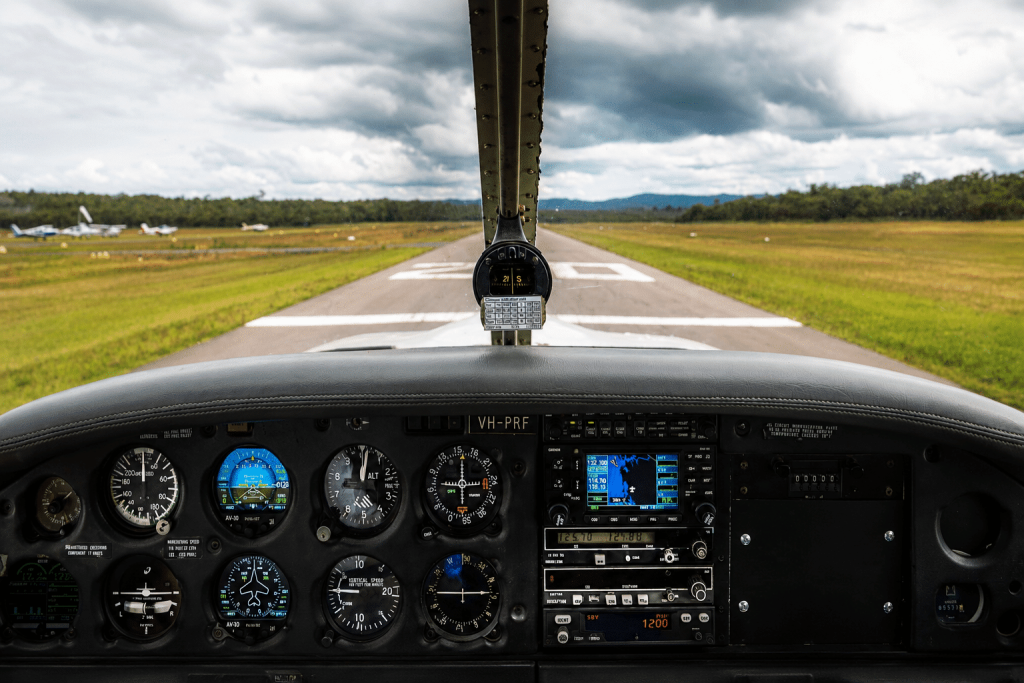
From my own experience, I struggled to fully grasp the landing phase and started questioning whether flying was right for me. That shifted during a lesson when the concept was explained in a slightly different way. We paused on the threshold for a moment, taking in the view, and focused on what the runway should look like and where to direct attention during each stage of the approach and landing. With that perspective, everything began to click.
It wasn’t about one instructor being better than another – just that sometimes hearing the same concept presented in a different way can make all the difference, depending on how it connects at that point in your learning.
Milestones That Matter
There are a few moments that stand out along the path to an RPL.
- First solo: equal parts focus and disbelief and a huge sense of weight being lifted
- First area solo: when flying starts to feel purposeful and you can navigate to the training area and back by yourself.
- Radio confidence: when you stop dreading every transmission
- Pre-flight independence: trusting your own process
The RPL itself isn’t just a test of skill, it’s a reflection of how far you’ve come in thinking and acting like a pilot.
Safety and Mindset
If maturity brings one clear advantage to aviation, it’s mindset.
There’s generally less appetite for unnecessary risk, and a stronger respect for procedures. You’re more likely to ask, Should I be doing this? rather than just, Can I?
That perspective is valuable. Aviation rewards discipline far more than confidence.
What Surprised Me Most About Learning to Fly
What surprised me most was how achievable the whole process became once I started. Before my first lesson, learning to fly seemed incredibly complex. There were radio calls, navigation, aircraft systems, weather and theory to understand.
What I discovered was that flight training is broken into manageable steps. Each lesson builds on the previous one and over time the pieces start fitting together. Looking back, the hardest part wasn’t learning to fly – it was taking that first step and booking the first actual lesson.
Yes, There is Theory
I’ll admit, I was a little naïve going in – I hadn’t fully appreciated how much theory is involved. But when you think about it, it makes perfect sense.
You’ll need to purchase the RPL Student Pilot Kit, which typically include the Bob Tait books, a flight log, and other supporting resources. I found it really helpful to revisit the relevant theory after each lesson as it reinforced what I’d just covered in the aircraft and helped it stick.
Another option I’d strongly recommend is attending one of the club’s RPL theory courses. This two-weekend course was invaluable for building a deeper understanding, particularly when it came to connecting the concepts and applying them in practice.
You might hear that many students don’t pass on their first attempt. In my case, I found the exam relatively straightforward – something I’d put down to consistent study, supported by the theory course, which really helped bring everything together and helped me make sense of it all.
Final Thoughts
Learning to fly later in life isn’t about chasing a distant dream – it’s a practical process of learning, adapting, and pushing through discomfort.
A few things became clear along the way. It’s mentally exhausting, so plan for that. Progress isn’t always linear, so don’t judge yourself lesson by lesson or against anyone else. Consistency matters far more than intensity, and you don’t need to be “naturally good” to succeed. More than anything, the real investment is time and focus – not just money.
It will test your patience, challenge your confidence, and stretch your ability to absorb new information. But it also brings moments that are quiet, controlled, and deeply satisfying, experiences that are hard to find anywhere else.
If you’re considering it, don’t wait for the perfect time. It rarely shows up. Start with a Trial Instructional Flight and see how it feels – that’s how it began for me, and for many others.
As you progress, it’s also worth getting your own headset. It doesn’t need to be top-of-the-line – something mid-range is a great place to start. You’ll likely find it more comfortable and consistent, which makes a difference over time.
I’m really happy with my decision to train with Central Coast Aero Club. Everyone is approachable and supportive, which makes a big difference when you’re starting out. Being at an uncontrolled airfield also removes the added pressure of talking to ATC while you’re still getting comfortable with flying. There’s rarely any waiting around for take-off, and with the training area just minutes away, you spend more time actually flying – which is a win-win.
Learning to Fly Later in Life: FAQ
Am I too old to learn to fly?
No. People begin flight training at all ages, including in their 50s, 60s and beyond. As long as you meet the required medical standards and can safely operate an aircraft, age alone is not a barrier.
Can I learn to fly after retirement?
Absolutely. Many pilots begin training after retirement when they have more time to pursue personal goals and interests. Learning to fly can be a rewarding and challenging new adventure.
Do older students take longer to learn?
Every student learns at a different pace. Many mature students bring patience, discipline and strong decision-making skills that help them progress effectively through training.
Is learning to fly physically demanding?
Flying requires concentration and coordination, but it is generally less physically demanding than many people expect. Training can often be adapted to suit individual needs and capabilities.